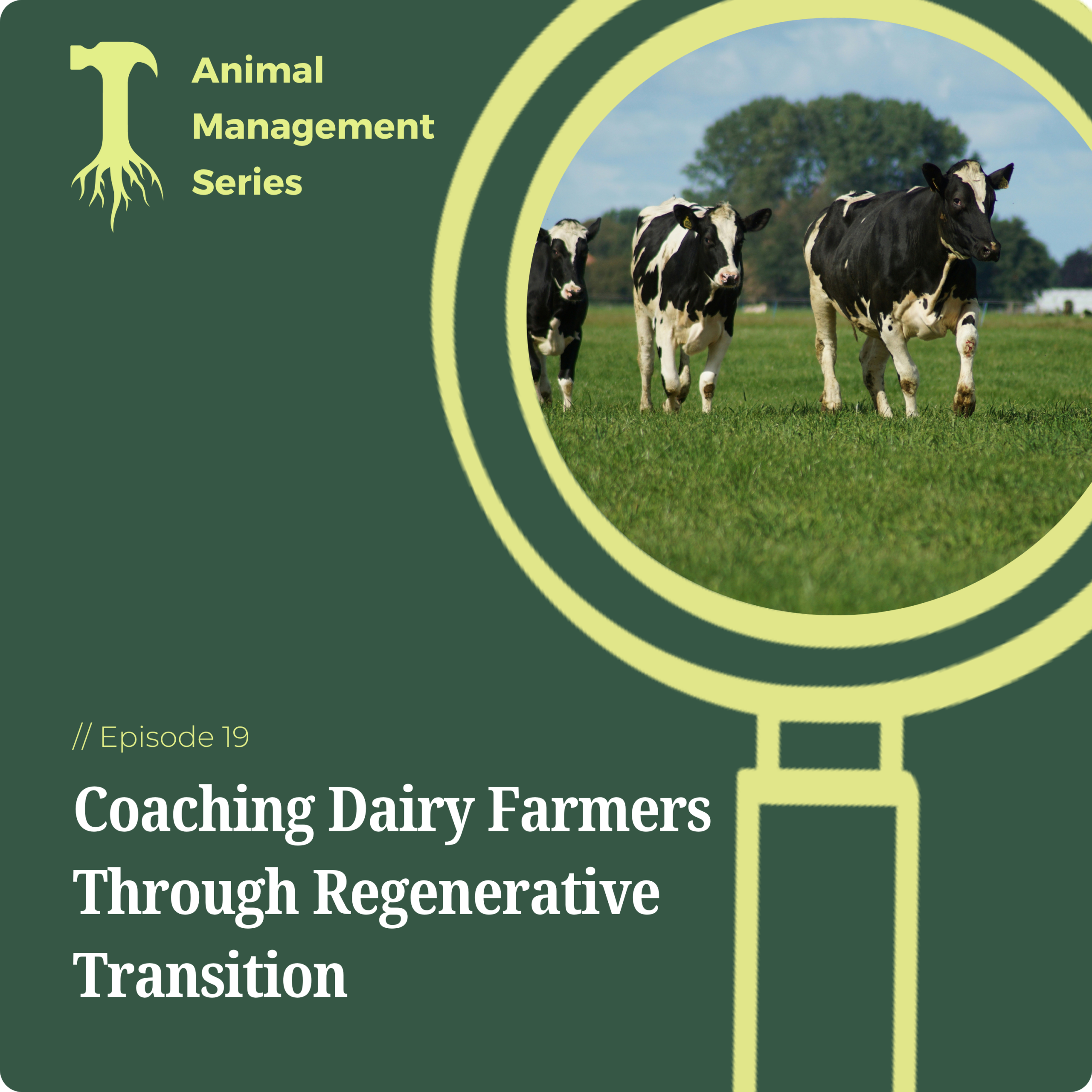
To kick off the animal management series I’m speaking with Maarten Sillekens, a former dairy farmer and current farm coach who brings more than three decades of experience working with dairy farms in Germany and Poland.
During COVID, his discovery of holistic management and the work of people like Allan Savory and Gabe Brown changed the way he thought about the challenges he had spent his career trying to solve. He has since become a Savory-accredited educator and now works with dairy farmers across Europe, including around 55 farms through Climate Farmers and other transition programs, as well as Arla’s regenerative pilot farms in the UK, Sweden, Denmark, Germany, and the Netherlands.
In this conversation we look at what regenerative animal management can actually mean in the context of a modern dairy operation. Maarten contrasts the high capital costs and dependence on fertilizer, concentrates, silage, machinery, and fossil fuels of many barn-based systems with approaches that make much greater use of grazing, diverse herbal leys, better pasture management, and even mobile milking.
More importantly though, we get into the process he uses to help farmers make that transition. Rather than starting with a prescribed set of regenerative practices, Maarten begins by asking farmers to define what they actually want their farm and their life to look like, then assesses things like sunlight capture, water and mineral cycling, biodiversity, animal health, veterinary and reproduction costs, and other indicators of how the whole system is functioning.
From there it becomes a process of small experiments, careful monitoring, learning, and adaptation. We also talk about something that can easily get lost in technical conversations about livestock management: rebuilding farmer confidence and pride at a time when dairy farmers are facing enormous economic and regulatory pressure, and the role that farmer networks and peer learning can play in making these transitions possible.